
Secret Japanese Time Capsules
Purchasing a brand-new 30 year old motorcycle
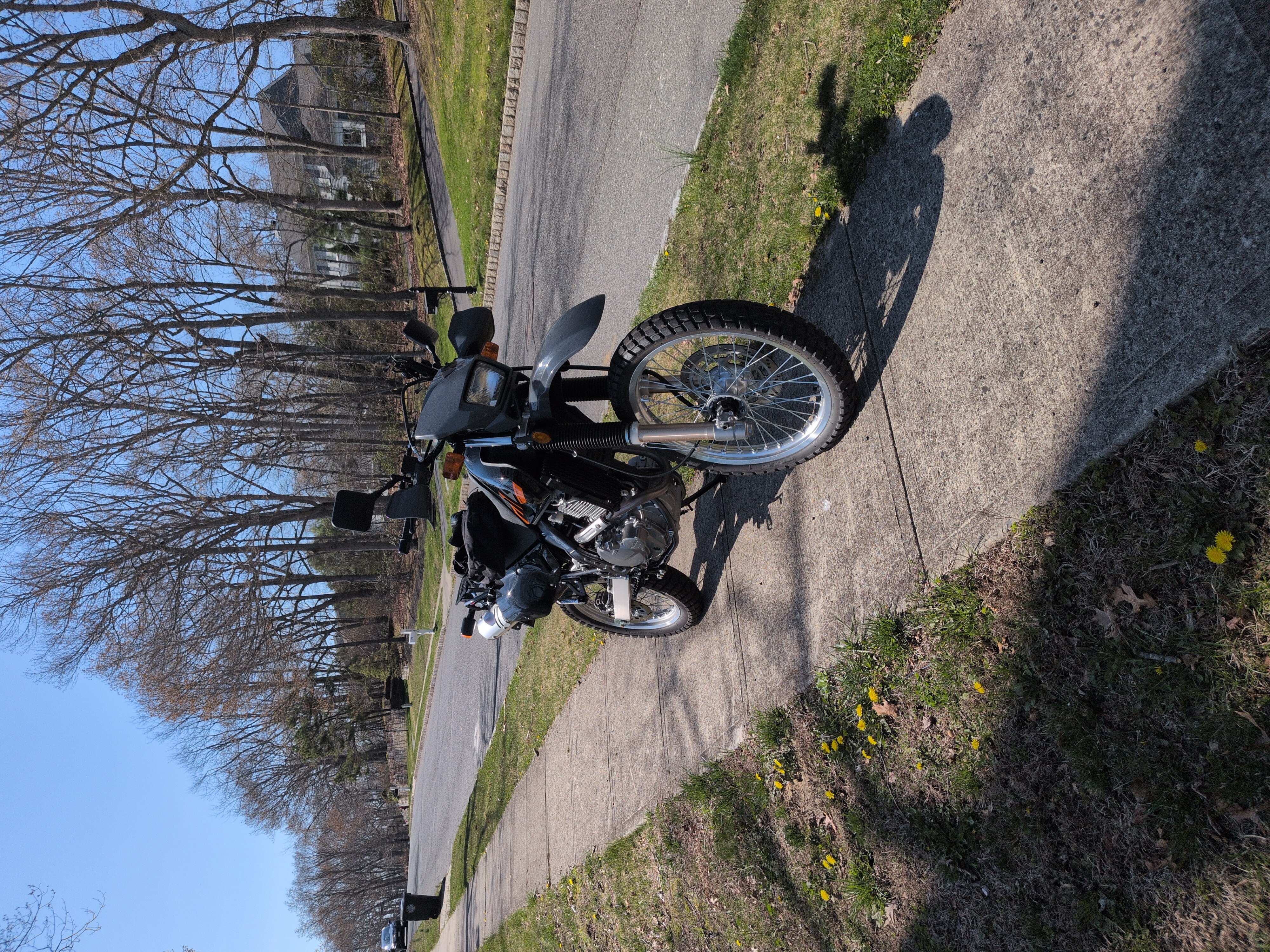
❀ Image: My new DR650 shortly after purchase located in one of it's many natural environmentsIt’s spring in New Jersey so naturally I’ve been zipping around on my motorcycle. But this is not your standard motorcycle. To start it requires a choke and a primed carburetor. It accelerates slowly. Almost as slow as it stops.
I ask myself: why? A [brand new DR650] plus mods, for this money I could have had a nice German sportbike. Hell, I owned one. It was a disaster.
Let this article be my formal answer.
In the modern world of motor vehicles everything is an impediment. The EPA destroying engineering. Brands chasing alien, inhuman designs. The prices are atrocious.
The Japanese have left a portal open. A small loophole. By not updating the license for the DR650 they’re allowed to keep the design exactly the same as it was in the 90s.
The proof is right there on the engine casings which have become rougher over the years from worn out machine dies that went unchanged over 30 years. Every single component is the exact same. The DR isn’t alone either - the [TW200] exists in the same fashion.
So what does a 90s Japanese bike get you? A bike that gives you full access. A bike that you can mold and form into what you want courtesy of it’s massive aftermarket support. A bike that you can take around the world and back. A bike that will go up mountains, around towns, through valleys, and into cities. A bike that you can take apart all yourself on the side of the road. A bike that gets 50mpg and costs 20 bucks a month to insure.
When I am riding around town asking myself why, these are the things I remind myself of. I remind myself that no other vehicle could accomplish all of this for the MSRP of $7,200.